News & Publications
On 23rd and 24th July 2025, the National Commission on Small Arms and Light Weapons (NACSA) convened a high-level, two-day stakeholder engagement at its headquarters to review the proposed National...
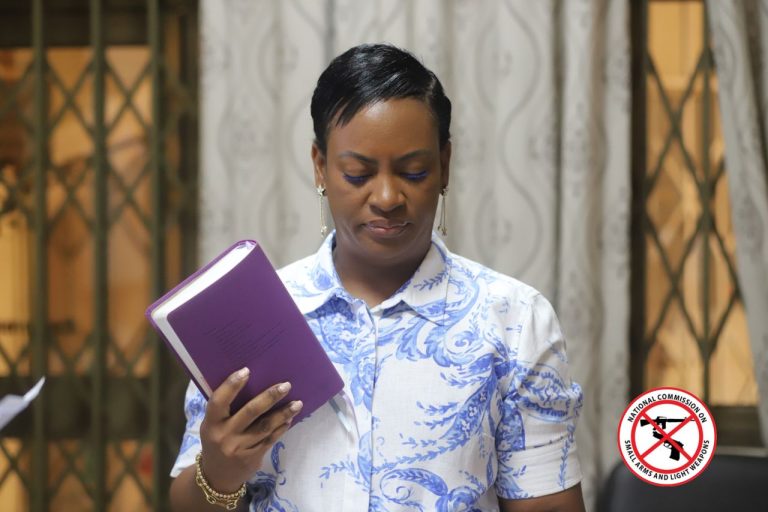
Accra, 25th July 2025 โ The Director General of the Criminal Investigations Department (CID) of the Ghana Police Service, COP Lydia Yaako Donkor, has been officially sworn in as a member of the...
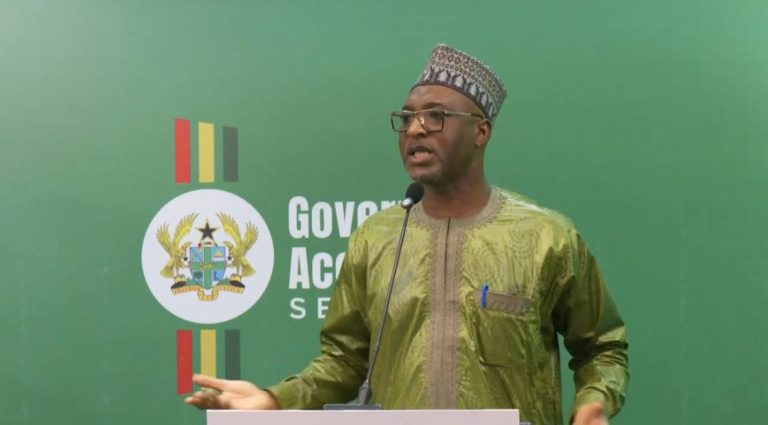
Minister for the Interior, Hon. Muntaka Mohammed โ Mubarak reiterated Governmentโs commitment to pass the National Arms Bill into law by the end of this year. A statement he made during the Government...
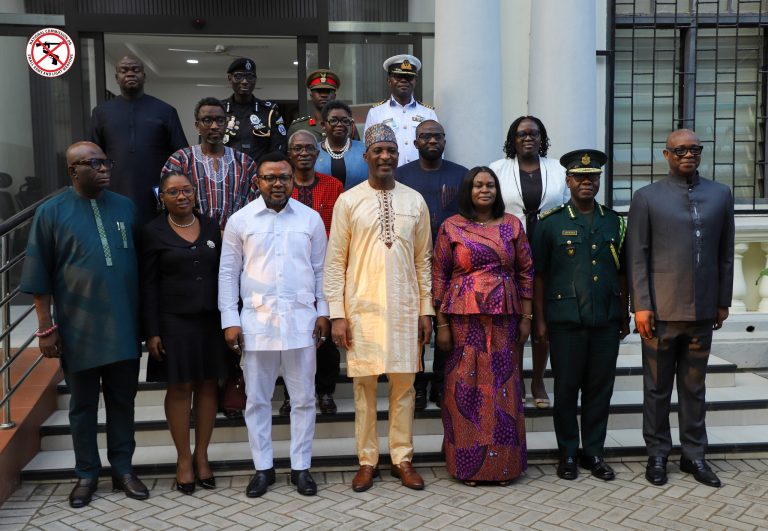
The Minister for the Interior has inaugurated a new Governing Board for the National Commission on Small Arms and Light Weapons (NACSA) at a ceremony held on Thursday, July 10, 2025. The newly...
Gun violence remains a pressing concern in Ghana, and our latest Open Source Gun Incidence Report (OGI) for Q1 2025 reveals alarming statistics. The Ashanti Region has recorded the highest number of...
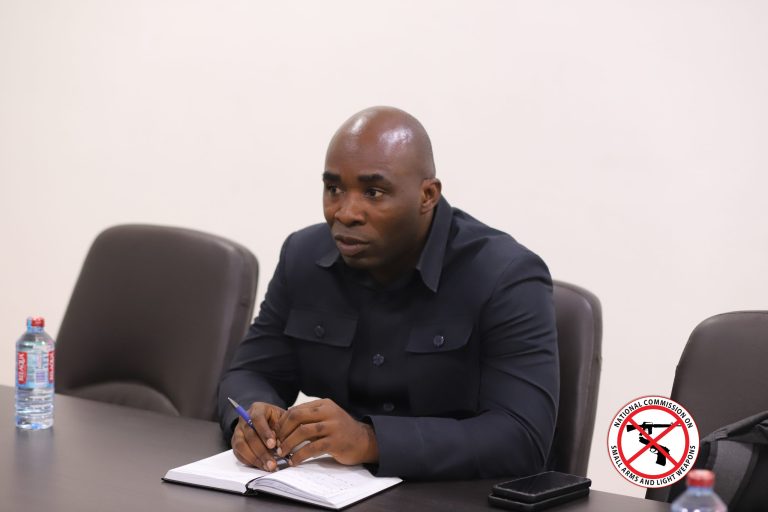
The National Commission on Small Arms and Light Weapons (NACSA) was honoured to host Lt. Col. Frederick Oppong Essel, a Military Advisor from the United Nations Office for West Africa and the Sahel...
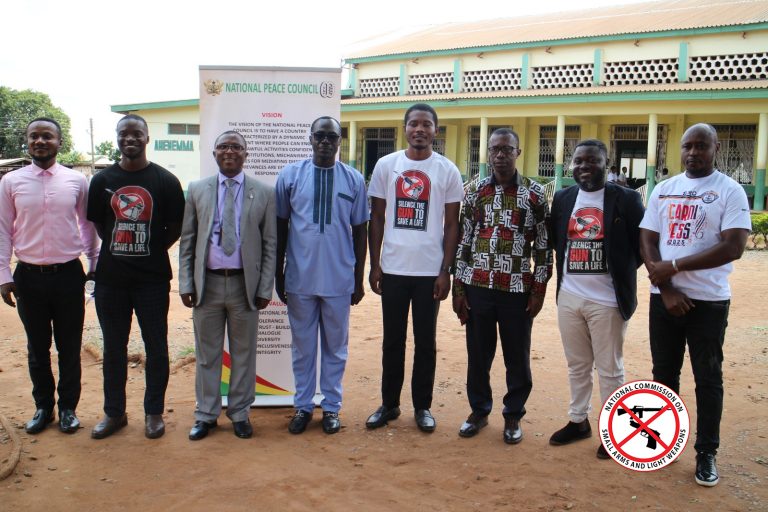
On June 12, 2025, the Ashanti Regional Office of the National Commission on Small Arms and Light Weapons (NACSA), in collaboration with the National Peace Council, held a public education and...
In a major step toward curbing the illicit movement of arms and ammunition, the National Commission on Small Arms and Light Weapons (NACSA), in collaboration with key security and intelligence...
The National Commission on Small Arms and Light Weapons (NACSA) convened key stakeholders from across the transport industry at its headquarters for a critical engagement aimed at strengthening the...
Head of State
Ministers
Executive Secretary
Social media
Small Arms Commission, Ghana4 hours ago
NACSA joined fellow security agencies, political and religious leaders, members of the diplomatic corps, students, and other key stakeholders at the University of Professional Studies, Accra (UPSA) for the commemoration of the International Day Against Drug Abuse and Illicit Trafficking, organised by the Narcotics Control Commission (NACOC).
The event, held under the theme โThe World Drug Problem: Persistent Issues, New Challenges, Innovative Responses,โ brought renewed attention to the evolving nature of drug-related crimes and the broader security risks they pose.
The Director General of NACOC, Brigadier General Maxwell Mantey, highlighted the strong link between illicit drugs and organised crime, noting how such networks continue to exploit gaps in enforcement systems.
Delivering the keynote address on behalf of the President of the Republic of Ghana, the Chief of Staff, Hon. Julius Debrah, urged students and the youth in particular to refrain from the use of illegal substances, stressing their devastating consequences on individual futures, families, and society as a whole.
The engagement underscores the intersection between drug trafficking, organised criminal networks, and the proliferation of illicit small arms, are mutually reinforcing and require coordinated, multi-agency responses to safeguard national security.
A secure and peaceful Ghana depends on disrupting the full ecosystem of organised crime, including the flow of illicit arms that often accompanies it.
The event, held under the theme โThe World Drug Problem: Persistent Issues, New Challenges, Innovative Responses,โ brought renewed attention to the evolving nature of drug-related crimes and the broader security risks they pose.
The Director General of NACOC, Brigadier General Maxwell Mantey, highlighted the strong link between illicit drugs and organised crime, noting how such networks continue to exploit gaps in enforcement systems.
Delivering the keynote address on behalf of the President of the Republic of Ghana, the Chief of Staff, Hon. Julius Debrah, urged students and the youth in particular to refrain from the use of illegal substances, stressing their devastating consequences on individual futures, families, and society as a whole.
The engagement underscores the intersection between drug trafficking, organised criminal networks, and the proliferation of illicit small arms, are mutually reinforcing and require coordinated, multi-agency responses to safeguard national security.
A secure and peaceful Ghana depends on disrupting the full ecosystem of organised crime, including the flow of illicit arms that often accompanies it.


