News & Publications
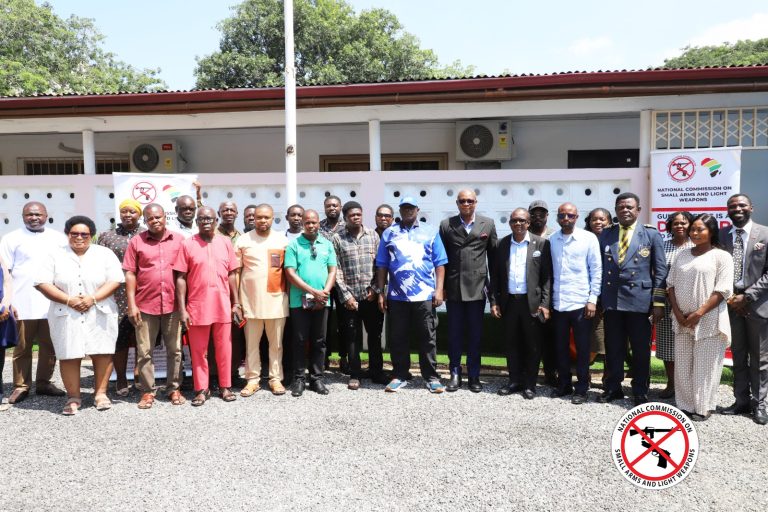
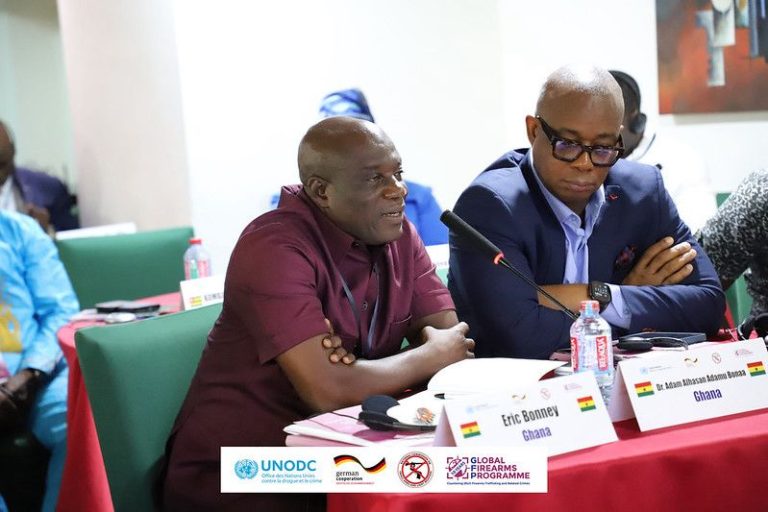
The KAFO VI Regional Planning Meeting concluded on 29th May, in Accra after three days of strategic dialogue, planning and collaboration among national focal points, regional experts and international...
Ghana, through the National Commission on Small Arms and Light Weapons (NACSA), is set to host a Regional Planning Meeting for Operation KAFO VI from May 27 to 29, 2025, bringing together...
The National Commission on Small Arms and Light Weapons proudly announces that its Acting Executive Secretary, Dr. Adam Alhassan Adamu Bonaa, has been appointed as the Chair of the Diversion...
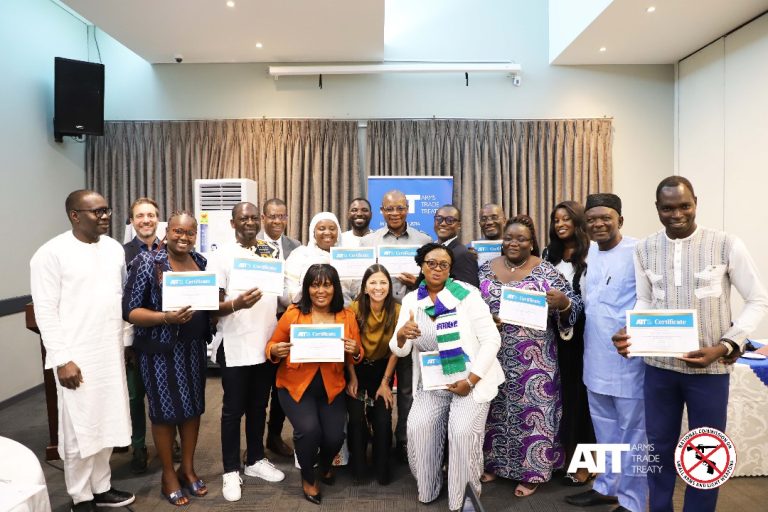
Ghana, through the National Commission on Small Arms and Light Weapons and with funding support from the European Union, successfully hosted the second regional Train-the-Trainers Workshop under the...
As part of its effort to combat the proliferation of illicit small arms and the rising trend of vigilantism, the National Commission on Small Arms and Light Weapons collaborated with the National...
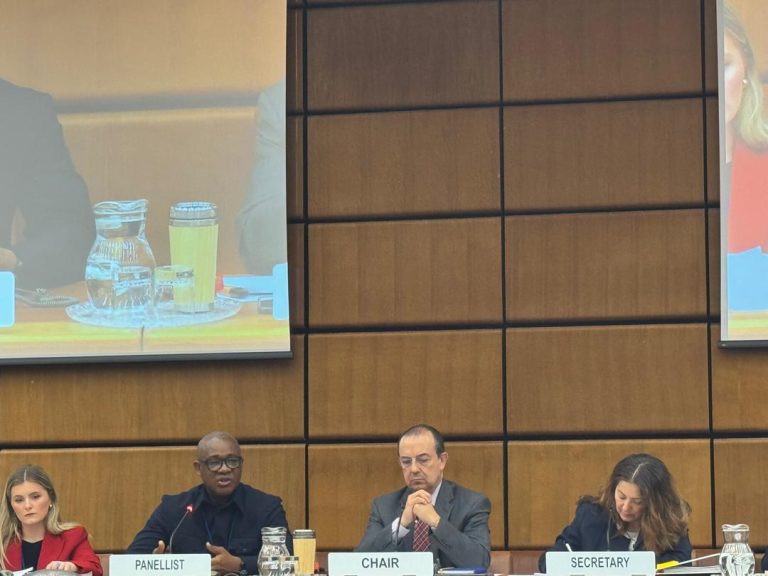
The Ag. Executive Secretary of the National Commission on Small Arms and Light Weapons is leading Ghanaβs delegation to the Twelfth Meeting of the United Nations Working Group on Firearms (WGF), which...
In a significant stride towards combating the illicit proliferation of small arms and ammunition in Ghana, a total of 29 packs of shotgun cartridges were intercepted during a security operation at the...
As part of its effort to combat the proliferation of illicit small arms and the rising trend of vigilantism, the National Commission on Small Arms and Light Weapons collaborated with the National...
The National Commission on Small Arms and Light Weapons (NACSA) strongly condemns the recent increase in the display and misuse of firearms that have shaken communities in the Ashanti Region, the...
Head of State
Ministers
Executive Secretary
Social media
Small Arms Commission, Ghana4 hours ago
NACSA joined fellow security agencies, political and religious leaders, members of the diplomatic corps, students, and other key stakeholders at the University of Professional Studies, Accra (UPSA) for the commemoration of the International Day Against Drug Abuse and Illicit Trafficking, organised by the Narcotics Control Commission (NACOC).
The event, held under the theme βThe World Drug Problem: Persistent Issues, New Challenges, Innovative Responses,β brought renewed attention to the evolving nature of drug-related crimes and the broader security risks they pose.
The Director General of NACOC, Brigadier General Maxwell Mantey, highlighted the strong link between illicit drugs and organised crime, noting how such networks continue to exploit gaps in enforcement systems.
Delivering the keynote address on behalf of the President of the Republic of Ghana, the Chief of Staff, Hon. Julius Debrah, urged students and the youth in particular to refrain from the use of illegal substances, stressing their devastating consequences on individual futures, families, and society as a whole.
The engagement underscores the intersection between drug trafficking, organised criminal networks, and the proliferation of illicit small arms, are mutually reinforcing and require coordinated, multi-agency responses to safeguard national security.
A secure and peaceful Ghana depends on disrupting the full ecosystem of organised crime, including the flow of illicit arms that often accompanies it.
The event, held under the theme βThe World Drug Problem: Persistent Issues, New Challenges, Innovative Responses,β brought renewed attention to the evolving nature of drug-related crimes and the broader security risks they pose.
The Director General of NACOC, Brigadier General Maxwell Mantey, highlighted the strong link between illicit drugs and organised crime, noting how such networks continue to exploit gaps in enforcement systems.
Delivering the keynote address on behalf of the President of the Republic of Ghana, the Chief of Staff, Hon. Julius Debrah, urged students and the youth in particular to refrain from the use of illegal substances, stressing their devastating consequences on individual futures, families, and society as a whole.
The engagement underscores the intersection between drug trafficking, organised criminal networks, and the proliferation of illicit small arms, are mutually reinforcing and require coordinated, multi-agency responses to safeguard national security.
A secure and peaceful Ghana depends on disrupting the full ecosystem of organised crime, including the flow of illicit arms that often accompanies it.