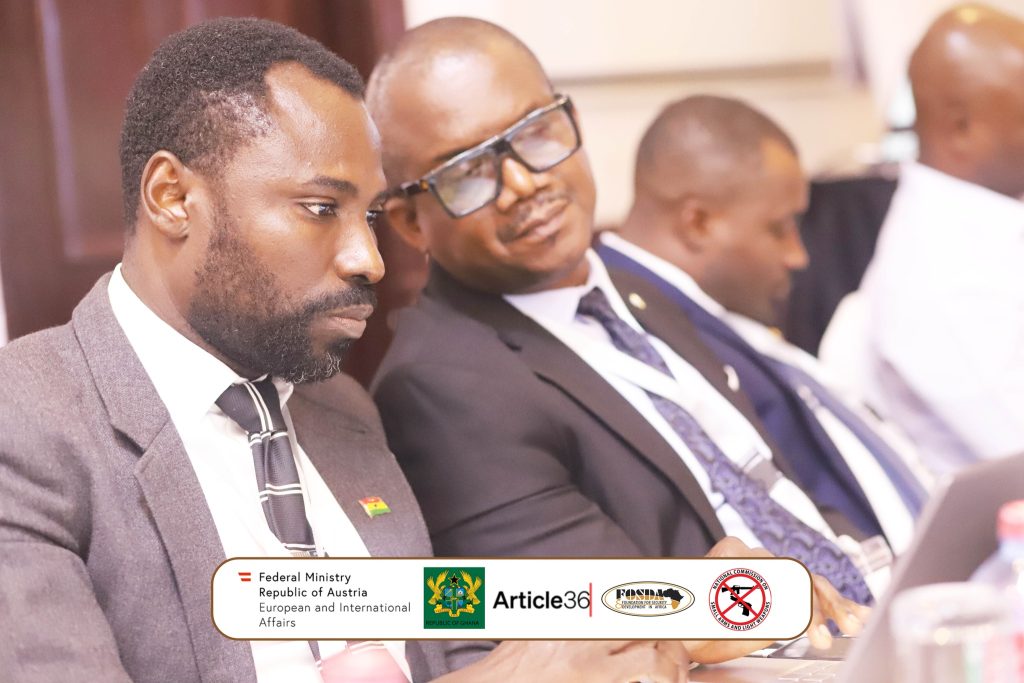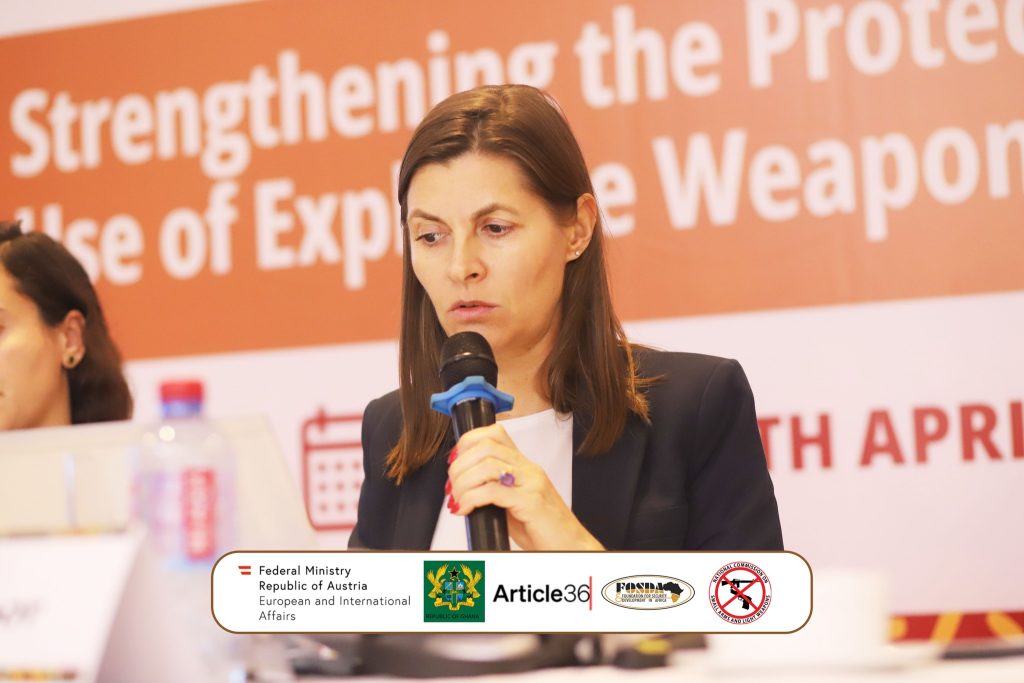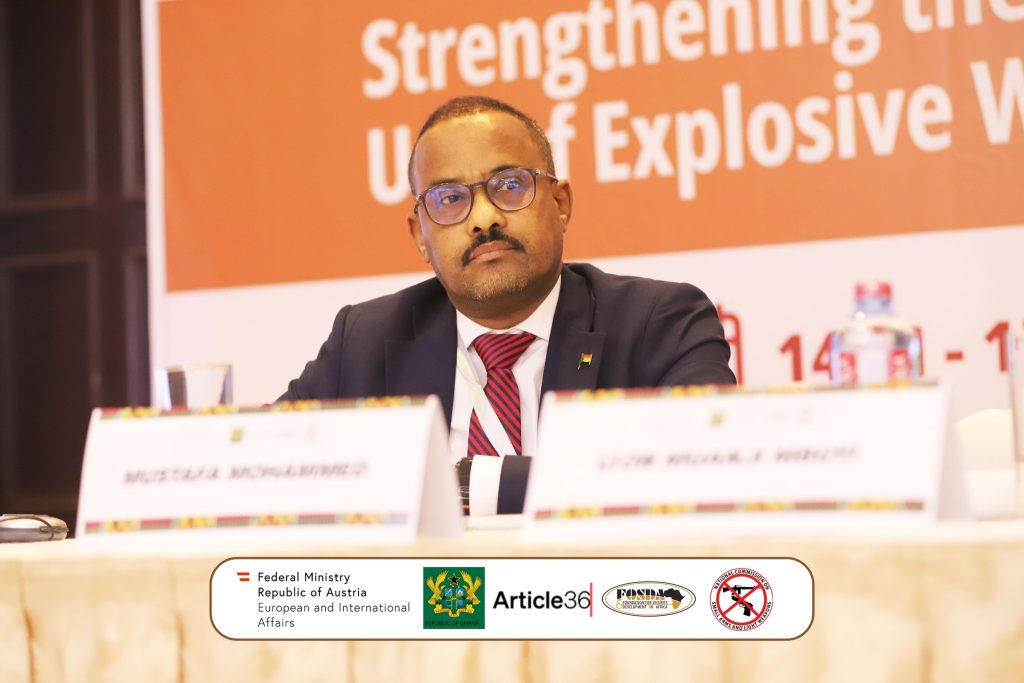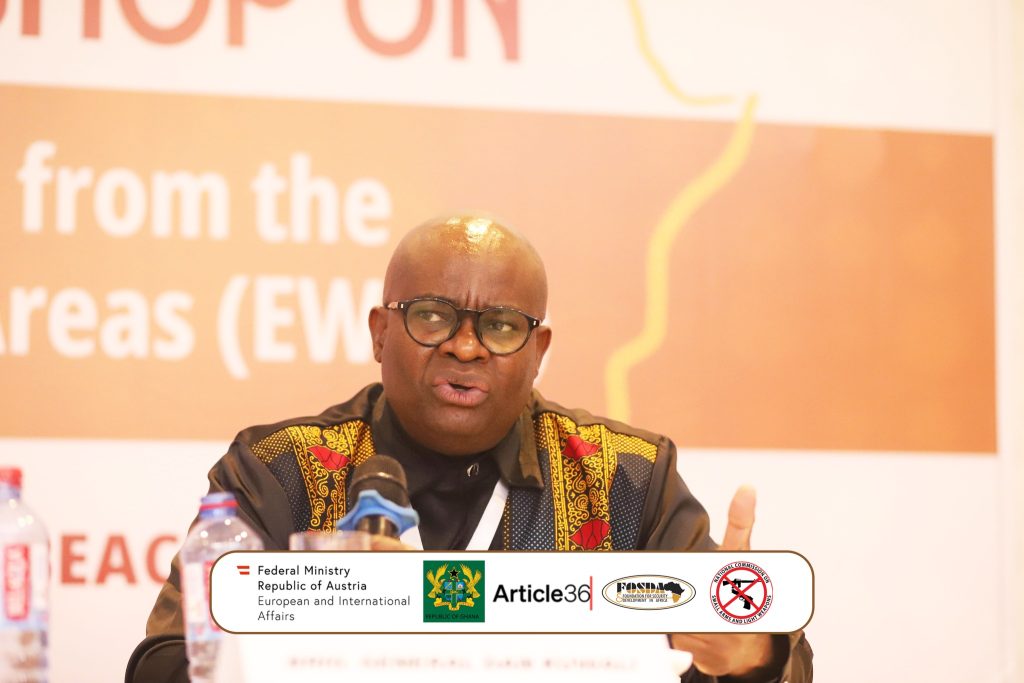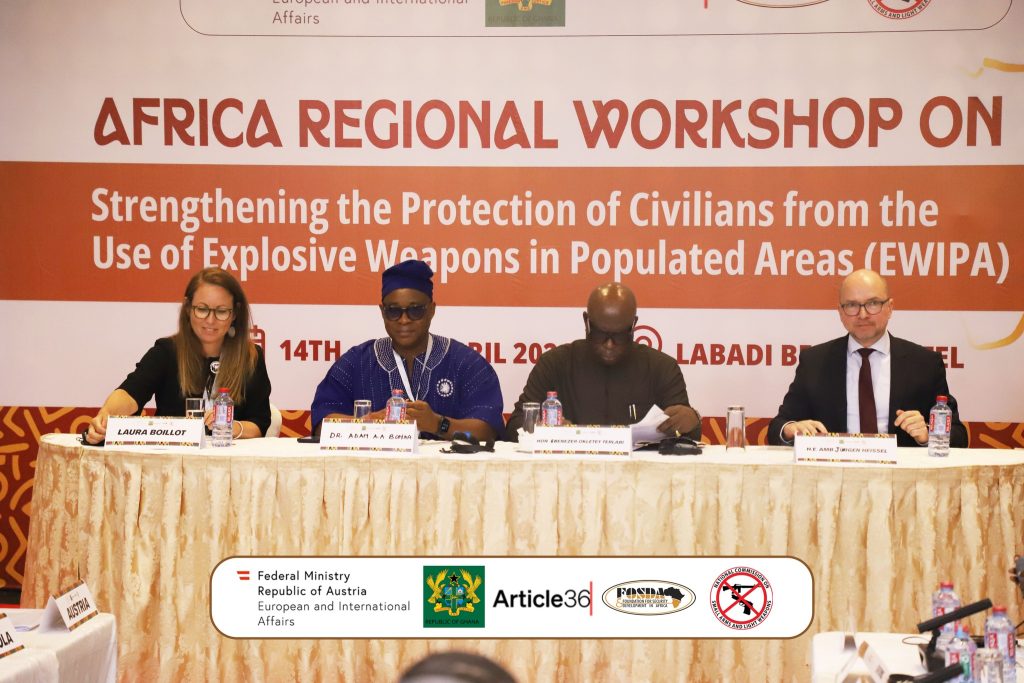

NACSA, in collaboration with key national and international partners, is hosting the Africa Regional Workshop on Strengthening the Protection of Civilians from the Use of Explosive Weapons in Populated Areas (EWIPA) in Accra from 14th to 15th April 2026.
Co-hosted with the Republic of Austria and supported by partners including Article 36 and the Foundation for Security and Development in Africa (FOSDA), the workshop brings together over 50 delegates from Africa, alongside representatives of governments, regional bodies, civil society and international institutions including the African Union, ECOWAS, International Committee of the Red Cross, United Nations Office for Disarmament Affairs, United Nations Institute for Disarmament Research and Humanity and Inclusion among others.
A Defining Moment for Civilian Protection in Africa
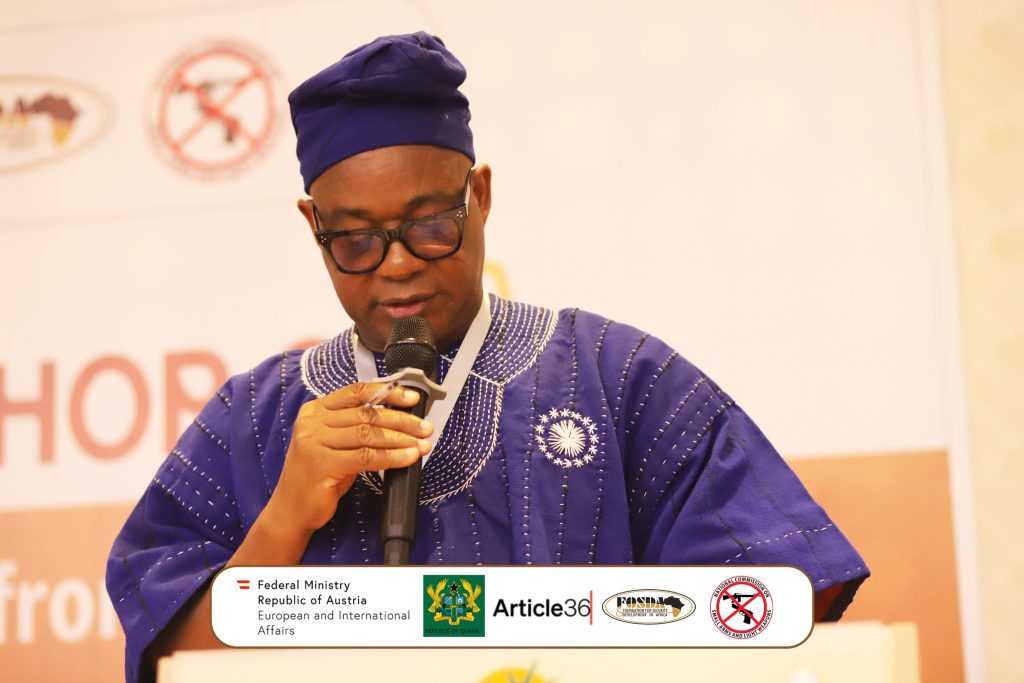
Delivering the welcome address, the Executive Secretary of NACSA underscored the urgency and significance of the workshop, noting that: “Civilians must never be relegated to the status of incidental casualties in times of war. Their lives, their dignity and their futures must be safeguarded, even amidst the gravest circumstances of armed conflict.”
The workshop is anchored on the Political Declaration on EWIPA, a landmark global commitment adopted in November 2022 to address the devastating humanitarian impact of explosive weapons in populated areas. The Declaration calls for restraint in the use of such weapons, improved data collection on civilian harm, enhanced victim assistance, and strengthened international cooperation.
NACSA emphasised that Africa is not merely a participant in the global humanitarian discourse but an increasingly decisive voice in shaping it.
Ghana’s Leadership and Commitment
In a keynote address delivered on behalf of the Hon. Minister for the Interior by the Deputy Minister for the Interior, Hon. Ebenezer Okletey Terlabi, Ghana reaffirmed its strong commitment to advancing civilian protection both domestically and internationally.
Hon. Terlabi described the EWIPA Declaration as a landmark in global efforts to address civilian harm by providing practical, actionable commitments to restrict the use of explosive weapons with wide-area effects in populated areas as well as improve transparency, support victims and deepen cooperation.
The Deputy Minister also highlighted that Ghana’s engagement goes beyond diplomacy, reflecting concrete national action, including ongoing efforts to strengthen the country’s arms control framework through the review of the Draft National Arms Bill. He further announced that Ghana has initiated processes to formally endorse the Declaration, signalling its intent to align national policy and practice with international humanitarian standards.
The Minister also drew attention to Ghana’s own experiences, referencing the tragic explosions in Apeatse and Konongo, which underscored that no country is immune to the risks associated with explosive harm.
Insights from Austria: Strengthening International Commitment
In his remarks, the Ambassador of Austria, H.E. Jürgen Heissel, highlighted Austria’s strong commitment to advancing the EWIPA agenda and commended Ghana for its leadership in convening the regional workshop. He stated that “Africa’s voice is essential in shaping how this Declaration is implemented globally. The experiences and leadership of African states will be critical in ensuring that these commitments translate into meaningful protection for civilians.”
He further emphasised that the EWIPA Declaration represents not only a political commitment but also a practical framework for changing operational practice, strengthening accountability, and ensuring that civilian protection becomes a central consideration in military decision-making.
From Commitment to Action
The two-day workshop provides a platform for in-depth discussions on adapting military doctrine, improving civilian harm tracking, enhancing victim assistance, and strengthening regional cooperation. Participants are discussing key questions, including how African states can operationalise the EWIPA commitments in ways that are context-specific, measurable and impactful.
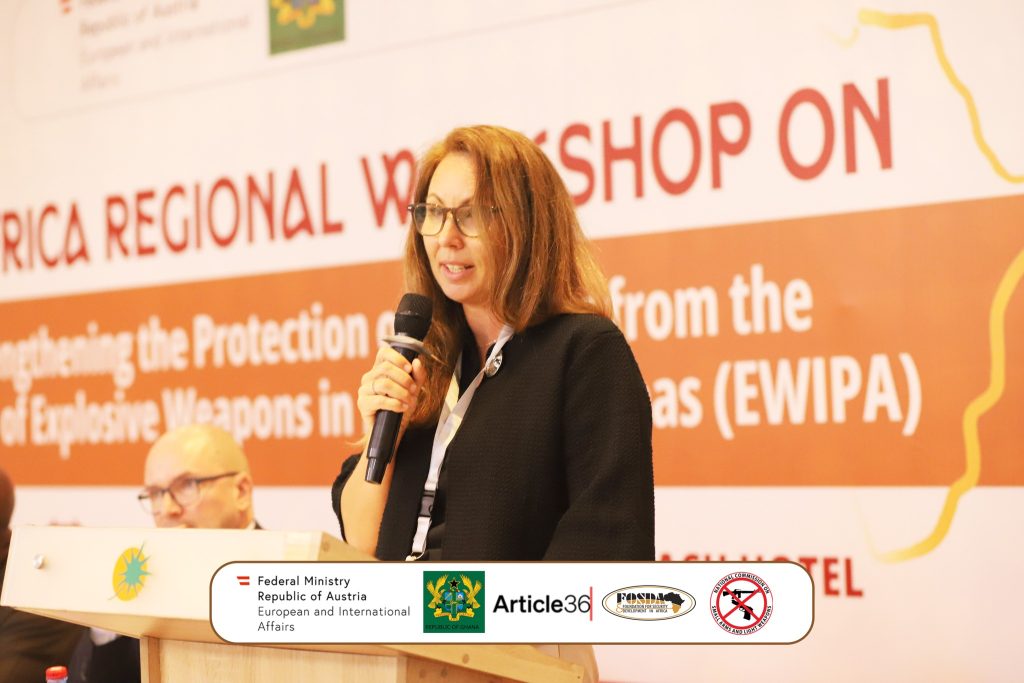
The President of Article 36, Laura Boillot, further emphasised the workshop’s focus on translating commitments into practice, highlighting the need to identify concrete measures across policy, military doctrine, operational guidance and training. She underscored the importance of strengthening risk assessment and mitigation approaches, as well as enhancing states’ understanding of both the immediate and long-term humanitarian impacts of the use of explosive weapons.
Dr. Adam Bonaa in emphasising the objective of the workshop stated that “we do not gather here to produce another communiqué that recedes quietly into the archives. We gather to generate the political momentum and practical commitments that will translate the EWIPA Declaration into a living instrument of civilian protection.”
NACSA, together with its partners, remains committed to advancing the processes leading to Ghana’s endorsement of the EWIPA Declaration and to strengthening frameworks that safeguard lives, dignity and the future of communities across the continent.